
Student Research with a Global Impact
In the spring of 1983, biology professor Tom Collins asked to bring his students to a plot of land newly acquired by Minnesota State Moorhead (then known as Moorhead State University). The success of this field trip inspired the development of what we now know as Minnesota State Moorhead's Regional Science Center (RSC), a comprehensive area providing hands-on learning experiences to thousands of PK-12 and university students every year.
Moorhead ecology and evolutionary biology seniors Derrek Friesen and Selah Grahn are carrying on the legacy of student experience at the RSC, taking part in internationally relevant research related to conservation and prairie restoration. Derrek and Selah regularly spend their class time at the Science Center engaging in experiential learning, a staple of the biosciences program at Minnesota State Moorhead.
"We heavily use the RSC in our programs, even in the introductory classes," Biosciences Professor Alison Wallace says. "The Regional Science Center provides a variety of habitats, and learning in that environment keeps students actively engaged and is a proponent for greater understanding."
This hands-on approach is a significant reason why many students interested in the sciences are drawn to Moorhead. Students in the College of Science, Health & the Environment often start research as early as their first year on campus. For Selah, this was one of the pivotal reasons she chose to be a Dragon.
"The ability to do research as an undergrad is great. I haven't heard of that happening at a lot of other universities," she says.
Students take part in faculty-guided research and also create their own experiences. Derrek and Selah learned the entire process of creating a proposal and writing a grant and then conducted their own research projects under the guidance of their instructors.
"Our professors give us the freedom to work on what we are passionate about," Derrek says.
Selah, Derrek, and Dr. Wallace's primary research is studying the effects of different types of fertilizer on restored prairies.
Internationally Relevant Research
North America's prairies cover more than a third of the continent, but in recent history they've been reduced. Prairies are among the rarest and most endangered ecosystems in the world. Less than 4 percent of the original area remains native prairie, according to the National Park Service.
Most of the Northern Great Plains have been converted to farms, as prairie soil is rich in nutrients for crops to thrive. The surviving native prairies are surrounded by agriculture. Fertilizer runoff has had devastating effects on the native grasslands downstream.
"The more fertilizer runoff you have, the more invasive plants show up," Selah says. "The pollinators are used to the native plants, so they don't have much food, affecting the entire ecosystem."
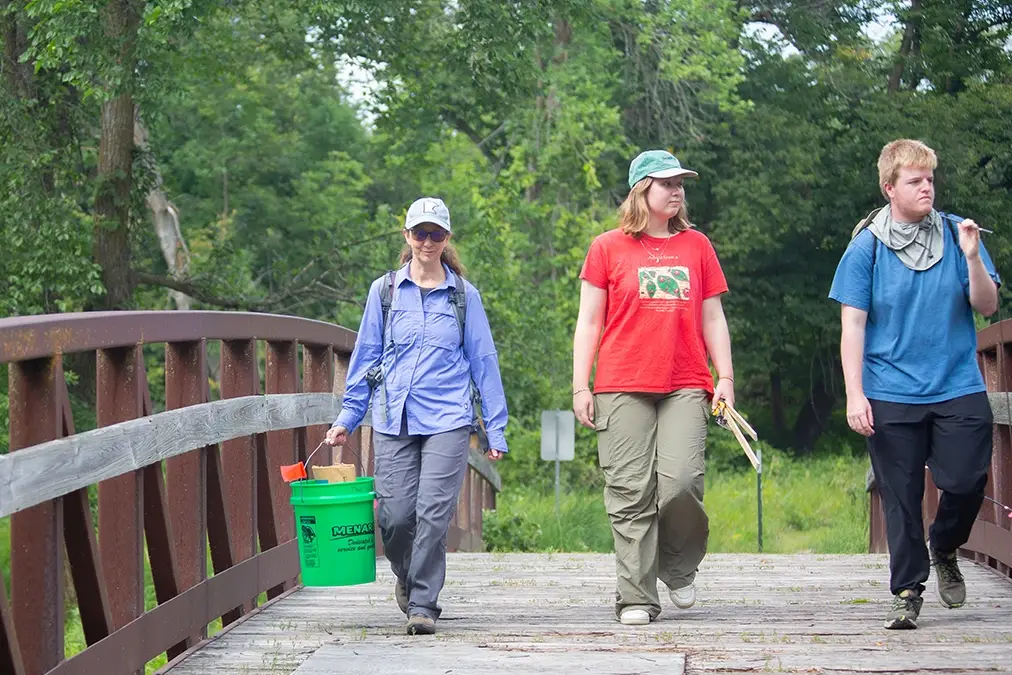
Professor Alison Wallace, Selah Grahn, and Derrek Friesen at the Regional Science Center
The project involves plots of land treated with fertilizers containing different active ingredients, along with a control group of plots with no fertilizer. Selah, Derrek, and Dr. Wallace regularly observe the plots and periodically take plant samples to identify them.
The number and specific types of plants growing in the area give the research team a clue as to how the active ingredients are affecting the native plants' growth. This data helps ecologists not only understand the effects of fertilizer but also informs future research on ways to counteract its negative effects. This research is crucial to the health and longevity of keeping and restoring diverse native grasslands capable of supporting wildlife.
Natural prairies also play a vital role in reducing atmospheric carbon dioxide levels. Prairie plants have extensive root systems (growing up to 15 feet deep) that capture and store carbon in the soil.
This makes the prairies one of the best natural ways to reduce emissions, especially because, unlike forests, carbon stays trapped even when disasters like wildfires break out.
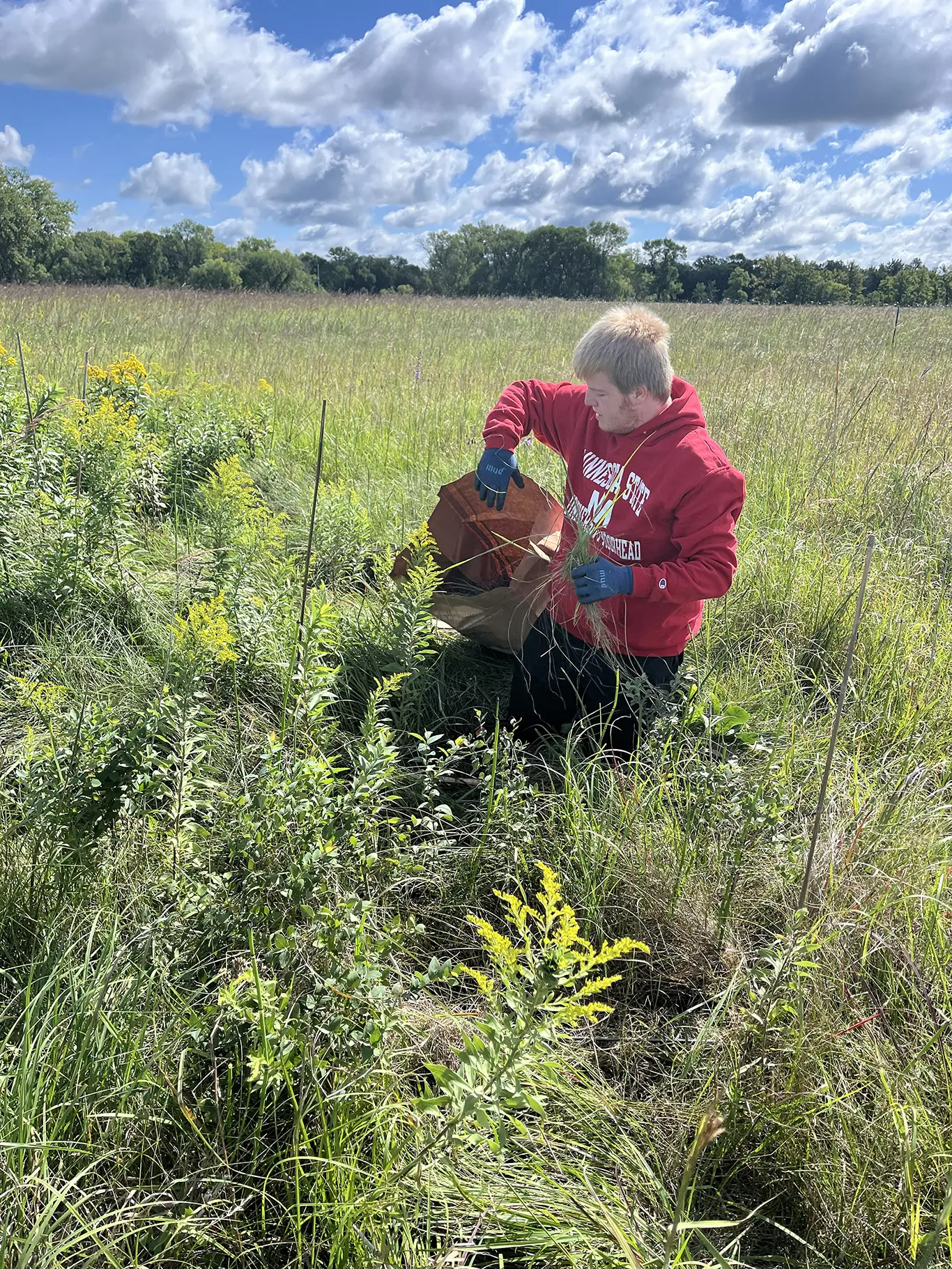
Derrek Friesen collecting plant samples from one of the Nutrient Network plots
This research is in partnership with the Nutrient Network (NuNet), a research cooperative that studies how nutrient enrichment and changes in herbivore density affect grasslands across the globe. NuNet provides the methods and processes to researchers like Dr. Wallace. In turn, Moorhead's students get to contribute to a database used to inform grassland ecology research worldwide.
This partnership was established in 2016 by Dr. Wallace. Her students have been participating in the research ever since. Moorhead is one of only three undergraduate institutions in the world contributing to the Nutrient Network.
The Science Museum of Minnesota (SMM) is highlighting this research opportunity by filming a mini documentary about the RSC's ongoing prairie restoration efforts. This restoration is being funded by Minnesota's Environment and Natural Resources Trust Fund.
"This project has a long-lasting ripple effect. Generations of students are working on this prairie," says SMM Senior Scientist Joy Hobbs.
Faculty Mentorship
Selah is conducting research with Dr. Wallace, using the Nutrient Network plots to study the effects of nutrients on insect populations. Selah caught insects over the plots using a sweep net, and then identified and counted them for each block. Doing this research with Dr. Wallace has helped her envision her future and developed their relationship.
"Alison has become a mentor to me," she says. "What she's done in her life is what I strive to do, and she has so much passion for what she does."
Derrek has done personal research with Bioscience Professor Brian Wisenden for multiple semesters. Although Dr. Wisenden is a leading authority on freshwater fish behavior, he also worked with Derrek on saltwater research, a challenge for both of them. There were a few projects that didn't go as planned, Derrek admits, but this new experience instilled a greater appreciation for the program and his instructors.
"We are allowed errors, and the professors understand that. It's nice to have a safety net here," he says. "It's better to make mistakes now than later in life."
Selah's experiences with Dr. Wallace have shown her that her true passion lies in nature conservation. She hopes to make an impact in that field after graduation. Derrek's goal is to one day open a marine mammal rescue. He plans on pursuing a Ph.D. in aquatic research.
For Selah and Derrek, their experience at Minnesota State Moorhead has allowed them to engage in internationally relevant research, connect with mentors, and make a lasting impact on the ecosystem of the Regional Science Center and surrounding area.
References Used
"A Complex Prairie Ecosystem." National Parks Service, U.S. Department of the Interior, www.nps.gov/tapr/learn/nature/a-complex-prairie-ecosystem.htm.
"About the Nutrient Network." Nutrient Network: A Global Research Cooperative, nutnet.org/#. Kerlin, Katherine.
"Grasslands More Reliable Carbon Sink than Trees." UC Davis, National Science Foundation, 9 July 2018, www.ucdavis.edu/climate/news/grasslands-more-reliable-carbon-sink-than-trees.
"Regional Science Center Programs." Minnesota State Moorhead, www.mnstate.edu/academics/colleges-schools/cshe/science-center/programs.
Biology degree
A Bachelor of Arts (BA) or Bachelor of Science (BS) degree in Biology from Minnesota State Moorhead is the best regional choice for students aspiring to work in human health, molecular biology, animal and environmental science or pursue graduate schools.
Learn moreMore Stories from Dragons
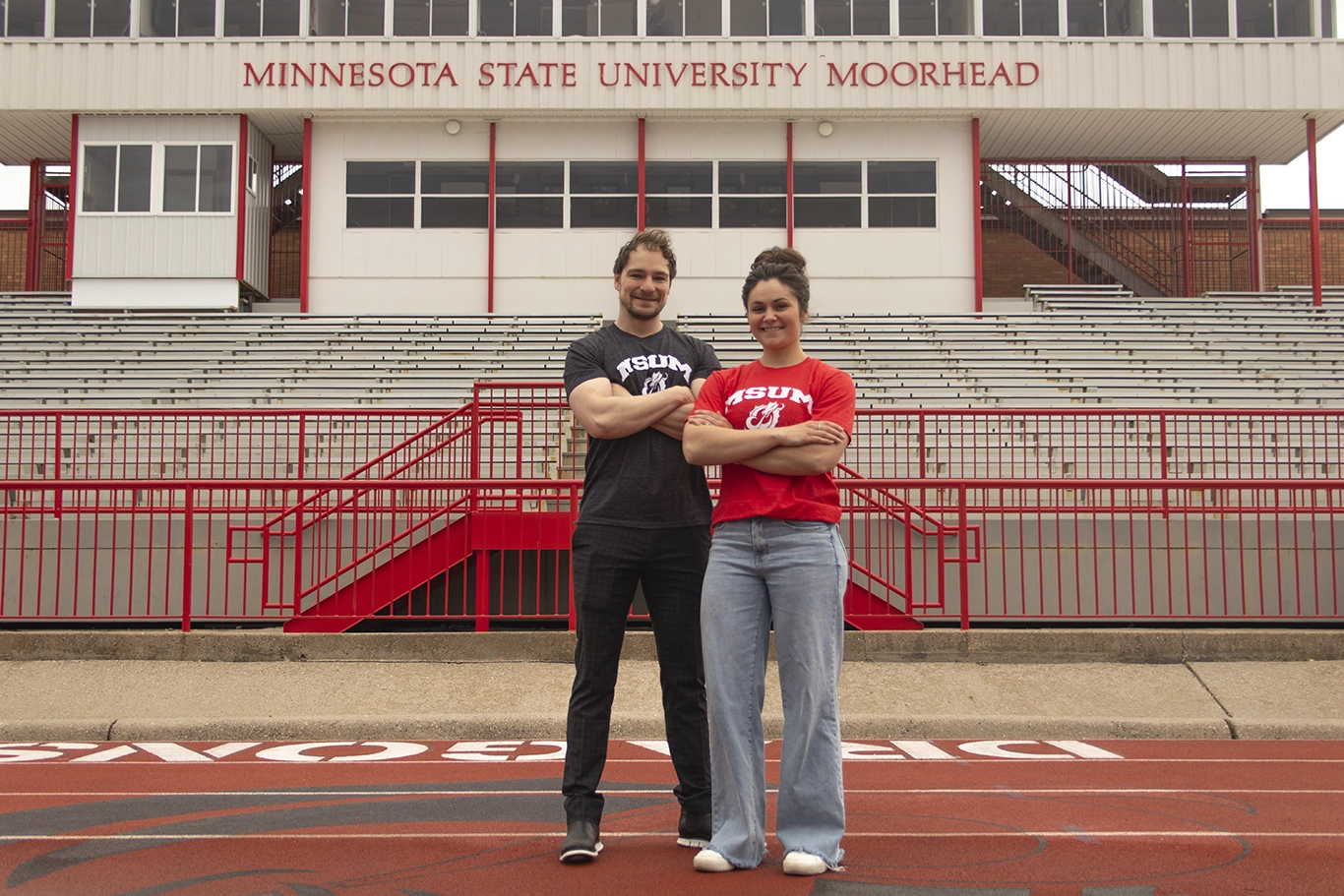
The Ripple Effect
Tobias and Rachel Boegel carry on lessons learned at MSUM to create healthy opportunities for their community.

From Cells to Stars: Learning by doing is learning that lasts
Experiential learning at Moorhead engages students in hands-on, real-world experiences, equipping them with versatile skills to become the region’s most sought-after professionals.
Criminal justice student acquires bachelor's and master's degrees in four years
Keegan Bestland was one of the first students to enter the BA in Criminal Justice and Master’s in Criminal Justice 4+1 program.